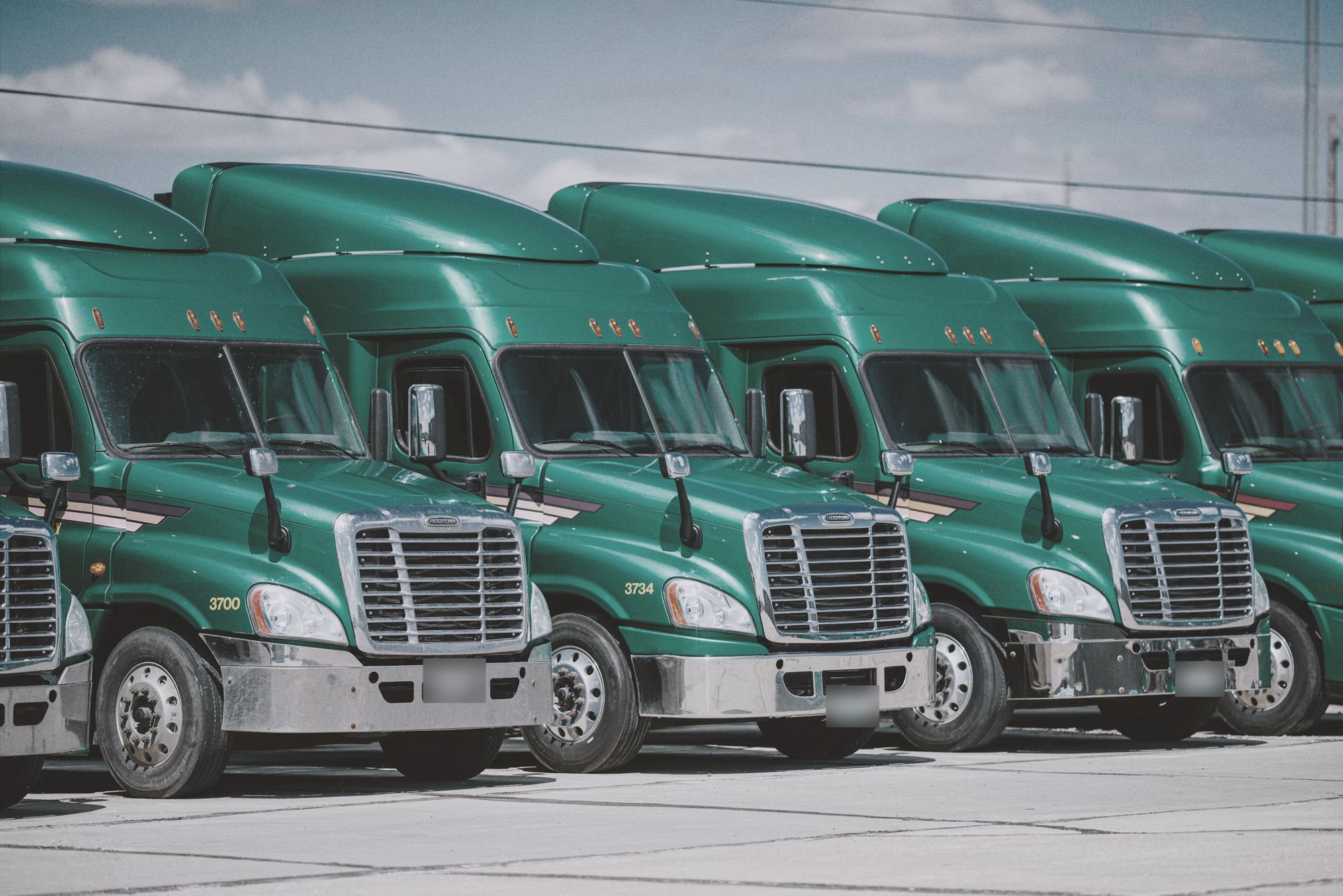
A second-generation carrier won its largest contract yet, and had sixty days to put eight more tractors on the road.
The situation
The company had grown steadily for fifteen years on regional routes. When a national retailer awarded it a dedicated lane, the contract called for eight additional tractors and trailers within sixty days, and paid on 45-day terms.
Its bank was supportive but quoted a ninety-day credit process. Meanwhile, a short-term advance taken during a slow winter was drawing on cash every day.
Our approach
Eighteen months of banking activity showed a business with dependable receipts, a pronounced winter dip, and one obligation doing most of the damage. We split the problem in two.
The equipment was financed against the tractors themselves, over a term matched to their working life. A revolving line, sized to the 45-day receivable gap, carried fuel and payroll for the new lane. The existing advance was retired at closing.
- Equipment finance secured by the new units, 60-month term
- Revolving line sized to the receivable cycle
- Short-term advance paid off at closing
The outcome
The new units were in service within five weeks. Daily debits gave way to a monthly payment, and the retailer extended the contract for a second year.
“They were the first people who looked at the business before they looked at the score.”
Owner, regional freight carrier